Better Module Advances Integration, Physics Development, and Next-Phase Planning
Hamburg, February 12-13, 2026
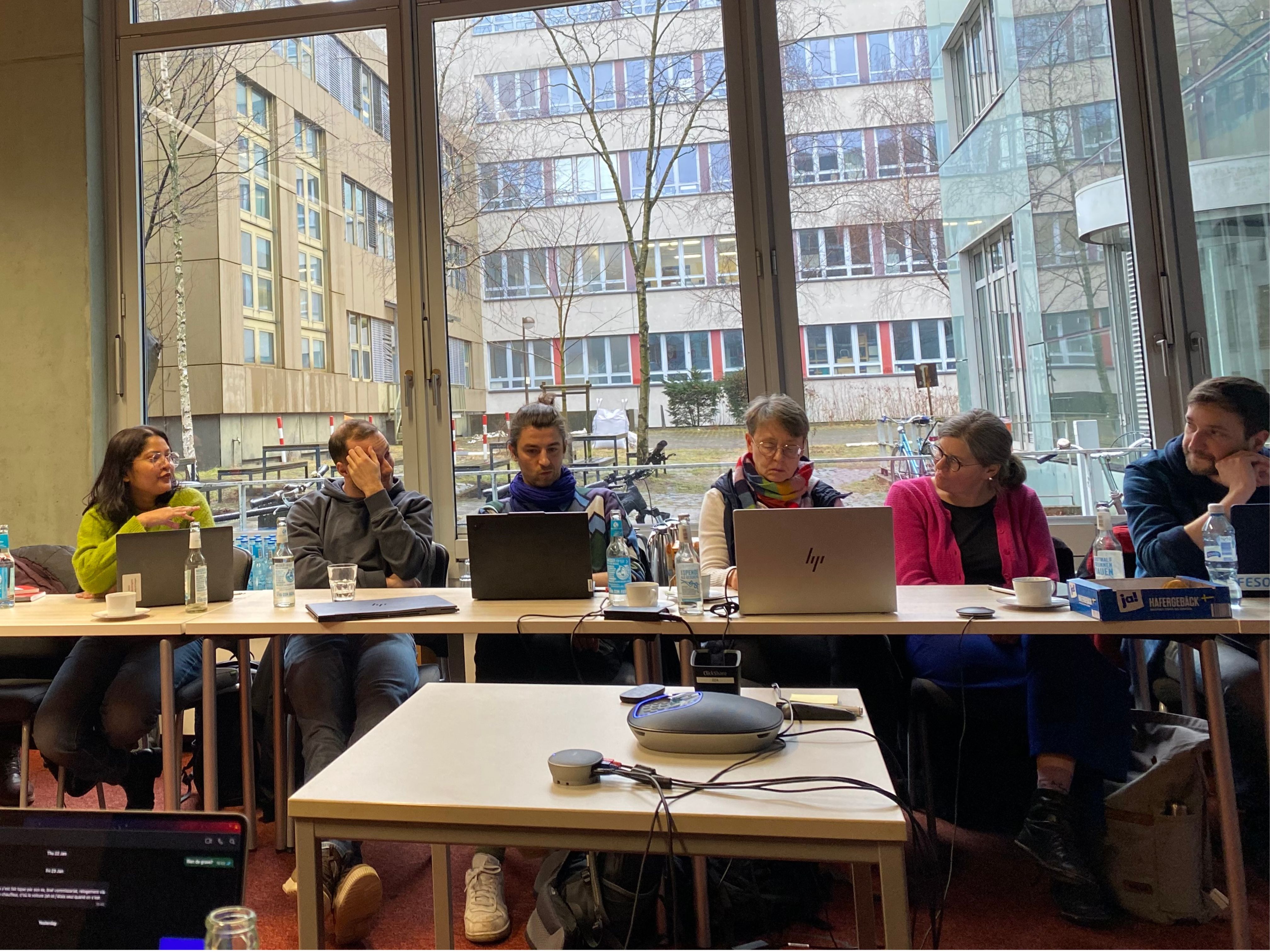
The WarmWorld Better module convened on 12-13 Feb in Hamburg, at the Max Planck Institute for Meteorology, to consolidate progress and define priorities for the final year of the module, with a strong focus on ensuring model realism, cross-component integration, and future high-resolution simulation capabilities.
A central objective of the meeting was to align scientific and technical developments with planning for the second phase of WarmWorld. In particular, discussions addressed the model run encompassing the developments from the first phase, the computational requirements for next-generation km-scale simulations, including the need to leverage emerging high-performance computing infrastructures beyond current resources.
Strengthening Model Capabilities and Physical Realism
Significant progress has been made across key components of the modelling system. Developments in turbulence representation have led to a numerically stable implementation of the Leonard term in ICON for idealised test cases, opening the way for further evaluation in more complex regimes such as stratocumulus clouds.
Advances in microphysics and cloud processes were another focal point. Work on rain microphysics and the use of observational “curtains” (e.g. from EarthCARE) is helping to better diagnose and reduce model biases, while improvements in ice formation processes are being extended across model configurations. At the same time, efforts to parameterize cloud droplet number concentrations based on external aerosol information are showing promising technical and scientific progress.
Land–atmosphere coupling is also gaining momentum, with the successful implementation of a global ParFlow demonstrator marking an important step toward more realistic hydrological processes within the modelling framework.
Integration Across Earth-System Components and Model Systems
A key theme of the meeting was improving consistency and interoperability across Earth-system components. Progress in coupling approaches — including developments around ICON, FESOM, and IFS-based configurations — is enabling more flexible and scalable system architectures. These efforts are essential for achieving robust, high-resolution coupled simulations and for supporting alternative model configurations as “simulation testbeds”.
At the same time, ongoing work addresses known biases, such as issues related to land-surface representation and cloud deficiencies under stable conditions, with new prototype approaches under investigation.
Looking Ahead
The meeting provided a platform to prioritise simulations for the final project year and to coordinate contributions toward Phase 2. A stronger emphasis on hydrology, land processes, and coupling is expected, alongside continued development of km-scale Earth system modelling capabilities.